Reconciliation: “We All Belong Together”
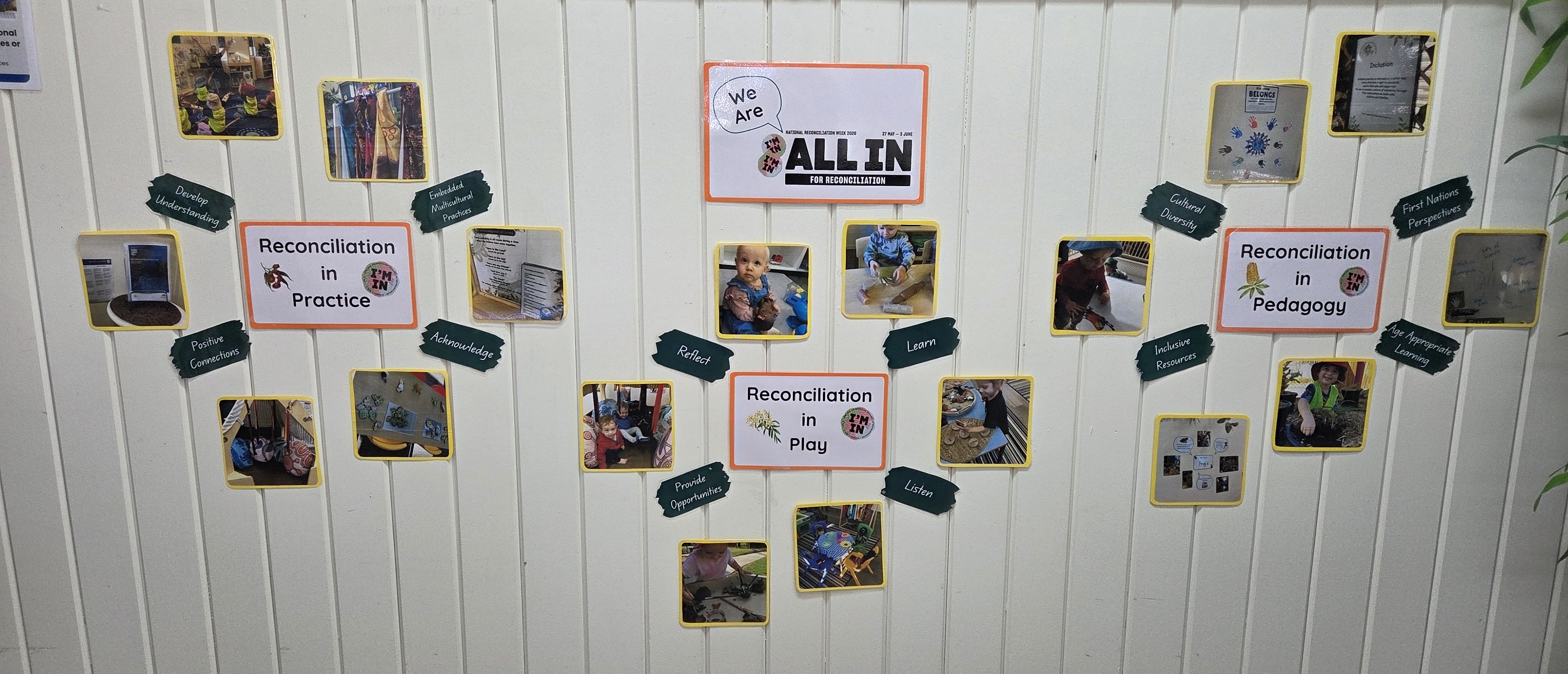
Today our learning shifted into a conversation about Reconciliation — We talked about how this week we celebrate being ALL IN, working together for a better future. The children shared ideas about what it means to belong, to include others, and to work together respectfully. We created a mind map of things that are “better together,” adding ideas throughout our discussion.
Children’s Input: Together vs Alone
The children thoughtfully compared different scenarios:
- Eating alone vs eating with friends
- Doing something by yourself vs doing it with someone
- Talking to one person vs talking to many
Their reflections showed a growing understanding of identity, community, and the importance of relationships — key ideas in both reconciliation and early childhood development.
Embedding Reconciliation in Our Everyday Practice
Today’s conversations connected beautifully with our ongoing reconciliation practices, many of which are part of our daily routines and learning environment. These include:
Daily Acknowledgment of Country during morning group time
- Yarning circles to share feelings and reflect
- Including Aboriginal and Torres Strait Islander perspectives in stories, art, music, and intentional teaching
- Embedding symbols, language, and resources such as posters, puzzles, and books
- Displaying the Aboriginal and Torres Strait Islander flags permanently
- Creating spaces inspired by local Country, using natural materials and Indigenous artwork
- Partnering with local Aboriginal organisations and inviting Elders to share knowledge
- Including cultural learning in staff meetings and professional development
These practices help children build respect, cultural understanding, and a sense of belonging — not just during Reconciliation Week, but every day.
Early Years Learning Framework Connections
Outcome 1 – Identity
Children build a confident self-identity when comparing “alone vs together” and discussing belonging.
Links to Identity conversations during Reconciliation.
Outcome 2 – Connectedness
Respecting diversity through Acknowledgment of Country, and yarning circles.
Children explore Connectedness by understanding Country and community.
Outcome 4 – Learning
Children engage in Active learning through hands-on inquiry.
Outcome 5 – Communication
Children communicate ideas about belonging, and working together.
Queensland Kindergarten Guidelines Connections
Identity Children develop a strong sense of identity when they:
- Compare experiences such as being alone vs being together
- Share ideas about belonging and inclusion during Reconciliation discussions
- Build confidence in expressing their thoughts and questions
This aligns with Identity — building a confident self-identity and recognising themselves as part of a community.
Connectedness Children strengthen their connection to people, place, and culture when they:
- Participate in Acknowledgment of Country and yarning circles
- Explore what it means to be “ALL IN” for Reconciliation
- Show respect for diversity through shared discussions
This reflects Connectedness — showing respect for diversity and understanding their place in the world.
Wellbeing Children experience wellbeing when they:
- Engage in safe, supported group discussions
- Feel valued in yarning circles and group inquiry
You can link this to Wellbeing — building confidence, resilience, and positive relationships.
Communicating Children built communication skills when they:
- Contributed to the Reconciliation mind map
- Compared experiences (alone vs together)
This supports Communicating — using language, symbols, and texts in meaningful ways.
A Day of Connection
Today’s learning showed how children naturally connect ideas when given space, time, and meaningful provocations. Their curiosity led the way — and their reflections reminded us why reconciliation begins with relationships, respect, and shared learning.
